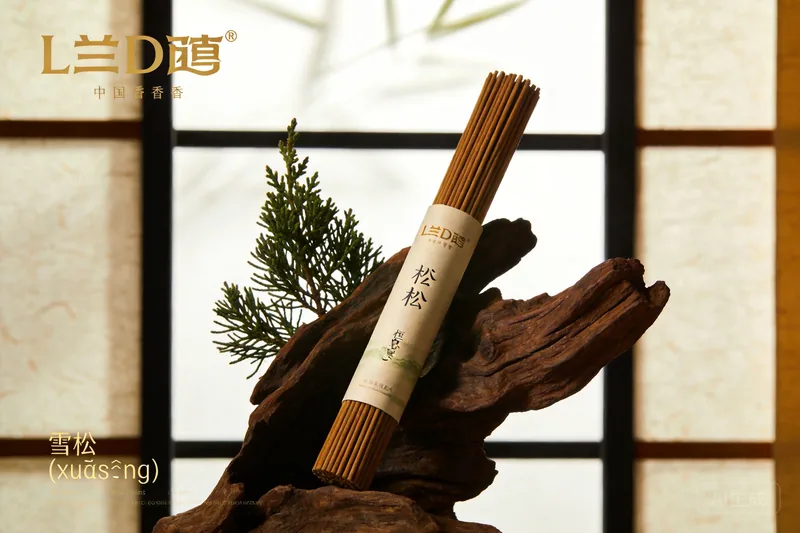
Data summary: “Cedar” in incense is a confusing common name. It can mean true cedar (Cedrus species, such as Himalayan cedar C. deodara) or — very often in “cedarwood” products — red cedar (Juniperus virginiana), a juniper, not a true cedar. Both are used for a clean, woody, slightly sweet aroma.
Key facts
| Chinese | 雪松 (xuěsōng) — “snow cedar” (true cedar) |
| Botanical source | Cedrus spp. (true cedar); “cedarwood” often Juniperus virginiana (red cedar) |
| What it is | A fragrant wood (and its essential oil) |
| Aroma | Woody, clean, slightly sweet/resinous |
| Traditional role | Incense, meditation, woodworking |
Aroma profile
Cedar has a clean, woody, slightly sweet-and-resinous aroma — a “dry wood” note distinct from the creamy sweetness of sandalwood or the resinous depth of agarwood. It is a common base or blending wood.
The naming problem (buyer intelligence)
“Cedar” is one of the most ambiguous names in fragrance:
- True cedars (Cedrus spp.) — e.g. Himalayan cedar (C. deodara), Atlas cedar (C. atlantica), Lebanon cedar (C. libani).
- “Cedarwood oil” in commerce frequently comes from red cedar (Juniperus virginiana) — which is a juniper, not a cedar.
- Other “cedar” names (Western red cedar Thuja plicata, etc.) add further confusion.
When you see “cedar” on a label, the actual species matters for aroma and price.
Traditional use vs modern evidence
Much “cedarwood incense” content repeats claims about relieving anxiety, insomnia, and depression. These are traditional or unverified claims, not established clinical fact. We describe cedar’s aromatic use; we do not make medical claims.
In incense & tradition
Cedar’s clean, dry wood note makes it a common background or base in incense blends, and a familiar scent in meditation and woodworking contexts. It reads “quiet and clean” rather than “sweet or deep,” which is why it is usually paired with a resin or a warmer wood rather than burned as a solo statement.
In Chinese incense the naming deserves care: 雪松 (xuěsōng) is true cedar (Cedrus), while several “cedarwood” products in commerce come from Juniperus virginiana (red cedar) or other conifers. The species — not the word “cedar” — sets the actual aroma, and the two are not interchangeable.
Where cedar sits among the woods
| Wood | Character |
|---|---|
| Cedar | Dry, clean, slightly sweet-resinous — a light, “space-clearing” note |
| Sandalwood | Creamy, sweet, soft — a warm, prized base |
| Agarwood | Deep, resinous, sweet-complex — the most precious material |
Cedar is the lightest of the three: it fills a room without dominating it, which is why it works as a base or a background scent rather than a starring note.
Safety
Incense combustion produces smoke and particulate matter. Burn in a well-ventilated space; avoid inhaling concentrated smoke.
FAQ
Is “cedarwood” a true cedar? Often not. Commercial “cedarwood” oil is frequently distilled from red cedar (Juniperus virginiana), which is a juniper, not a true cedar in the genus Cedrus. True cedars include Himalayan cedar (C. deodara), Atlas cedar (C. atlantica), and Lebanon cedar (C. libani). Other plants called “cedar,” such as Western red cedar (Thuja plicata), add further confusion. Because the common name “cedar” covers several unrelated conifers, the actual species on the label determines the aroma, and it is worth checking which one you are buying.
People Also Ask (Long-Tail)
What does cedar incense smell like? Cedar incense has a clean, woody, slightly sweet-resinous aroma — a “dry wood” note, distinct from the creamy sweetness of sandalwood or the resinous depth of agarwood. It reads “quiet and clean” rather than sweet or deep, which is why it often serves as a base or background note in blends. The scent fills a room without dominating it, so cedar is usually paired with a resin or a warmer wood rather than burned as a solo statement.
What is the difference between cedar and sandalwood? Cedar is a dry, clean, slightly sweet-resinous wood note, while sandalwood is creamy, sweet, and soft. Cedar tends to be lighter and sharper, with a “space-clearing” quality, whereas sandalwood is rounder, warmer, and more prized as a base note. Both are woody, but they sit at different weights in a blend: cedar provides a clean, airy background, and sandalwood anchors with a rich, milky sweetness. They are distinct aromas from different botanical sources.
Which cedar is used in incense? It varies. True cedars (genus Cedrus), such as Himalayan cedar (C. deodara) and Atlas cedar (C. atlantica), are one source of the woody note. But much commercial “cedarwood” oil actually comes from red cedar (Juniperus virginiana), a juniper rather than a true cedar. Because these are different plants with different aromas, the species matters for both scent and price. When a label simply says “cedar,” the actual source is worth checking before buying.
Is cedar incense safe for pets? All incense produces smoke and particulate matter, and that general caution applies to pets as well as people. Burn incense in a well-ventilated space, avoid letting smoke concentrate, and keep lit material and ash out of reach of children and pets, who may be more sensitive to airborne particles or curious about burning objects. This is general safety guidance that applies to every incense material, not a claim about any specific condition or about cedar in particular.
Is cedar incense the same as cedarwood oil? Not necessarily. Commercial “cedarwood oil” often comes from red cedar (Juniperus virginiana), a juniper, while true cedar (Cedrus) is a different genus. This means the oil and what you might think of as “cedar wood” can come from entirely different plants. The two names overlap loosely in commerce, so a product labeled “cedar” could be based on either true cedar or a juniper-derived oil. Checking the species is the only way to know what you are actually getting.
What is the difference between cedar, sandalwood, and agarwood? Cedar, sandalwood, and agarwood are three woods at three different weights. Cedar is dry, clean, and light — a “space-clearing” note that fills a room without dominating it. Sandalwood is creamy, sweet, and warm, a prized base note. Agarwood is deep, resinous, and sweet-complex, the most precious of the three. They come from different plants — cedar from Cedrus or juniper, sandalwood from Santalum album, and agarwood from resin-impregnated Aquilaria wood — and each fills a different role in a blend.
See also: sandalwood, the sandalwood incense guide, and the full scent guide.
Sources
Sources: botanical references on Cedrus and Juniperus virginiana, plus the observation that commercial “cedarwood” claims are widely overstated. This is editorial knowledge content, not medical advice.