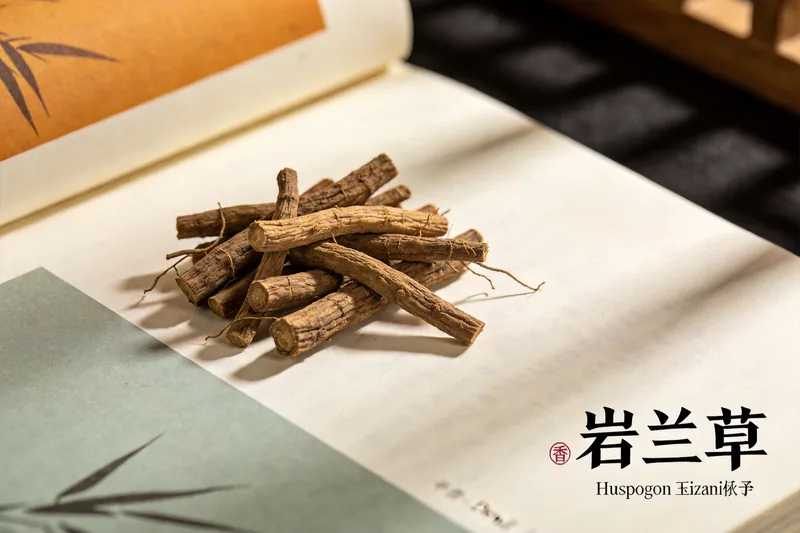
Definition: Vetiver — yánláncǎo (岩兰草) in Chinese — is a tropical grass whose roots yield a deep, earthy, woody, slightly smoky essential oil, used primarily as a base note in perfumery and incense.
Key facts
| Chinese | 岩兰草 (yánláncǎo) |
| Botanical source | Chrysopogon zizanioides (syn. Vetiveria zizanioides), a grass |
| What it is | The roots (steam-distilled), not a wood |
| Aroma | Earthy, deep, woody, smoky, warm |
| Traditional role | Perfumery base note, incense |
Aroma profile
Vetiver has a deep, earthy, “rooty” aroma with woody and slightly smoky warmth. It is a classic base note — heavy and long-lasting — used to anchor lighter notes in a blend. It is sometimes called “oil of tranquillity” for its grounding character (an aromatherapy description, not a medical claim).
The scent is genuinely “underground”: damp earth, dry roots, and a faint smoky-green sweetness. It is the reference “earthy” note, darker than patchouli’s musty-spice and smoother than cedar’s dry wood. Because it is tenacious, a small amount of vetiver can carry a blend for hours.
Botanical note
Vetiver is a grass (family Poaceae). The name has been revised from Vetiveria zizanioides to Chrysopogon zizanioides. It is also known as “khus” in India. Unlike woods or resins, the fragrant part is the root, steam-distilled.
The roots are famously deep and dense (they are also used for erosion control and woven into screens and mats — a separate, non-fragrance use). The essential oil is distilled from the washed, dried roots.
Origins & grades
Vetiver oil is produced across the tropics, and origin meaningfully changes the aroma:
- India (khus) — the classic, earthy-woody profile; the historical reference.
- Haiti — lighter, cleaner, often described as more floral/sweet.
- Java (Indonesia) — smoky, dry, and woody.
- Réunion (Bourbon) — prized, floral-earthy; historically the benchmark for quality.
The origin note matters because “vetiver” on a label can be several different scent profiles. In incense, the earthy Indian/Java types are the most common.
In incense & perfumery
Vetiver is almost always a base note: it sits under brighter top notes and gives a blend its depth and staying power. In incense it is usually paired with sandalwood or cedar (woody warmth) or brightened with citrus. It is rarely burned alone — its job is to anchor, not to lead.
Vetiver vs patchouli
Both are earthy base notes, but they differ:
| Vetiver (岩兰草) | Patchouli (广藿香) | |
|---|---|---|
| Plant part | Grass root | Mint-family leaf |
| Character | Earthy, smoky-green, smooth | Earthy, musty-sweet, spicy |
| Role | Grounding base | Anchoring base |
Vetiver is smoother and “drier”; patchouli is mustier and spicier. They are often used together to build a deep, earthy base under woods and florals.
Traditional use vs modern evidence
Vetiver is described in aromatherapy as “calming” and “grounding.” We treat these as aromatic/experiential descriptions, not medical claims. We do not claim vetiver treats any condition.
Safety
Incense/essential-oil combustion produces smoke and particulate matter. Burn in a well-ventilated space; avoid inhaling concentrated smoke.
FAQ
Is vetiver a wood? No — it is a grass; the fragrant part is the steam-distilled root. Vetiver belongs to the grass family (Poaceae), and unlike woods or resins, the aromatic material is the washed and dried root, which is steam-distilled to yield the deep, earthy essential oil. So although vetiver reads as woody and earthy, its botanical source is a tropical grass, not a tree.
What does vetiver smell like? Deep, earthy, woody, slightly smoky — a heavy base note. The scent is genuinely “underground”: damp earth, dry roots, and a faint smoky-green sweetness. It is the reference “earthy” note, darker than patchouli’s musty-spice and smoother than cedar’s dry wood, and it is tenacious enough to carry a blend for hours. This grounding character is why it is sometimes called “oil of tranquillity,” an aromatherapy description rather than a medical claim.
People Also Ask (Long-Tail)
What does vetiver smell like? Deep, earthy, “rooty,” and woody with slightly smoky warmth — a heavy base note, sometimes called “oil of tranquillity” (an aromatherapy description, not a medical claim). The scent reads as damp earth and dry roots with a faint smoky-green sweetness, darker than patchouli and smoother than cedar. Because it is tenacious, a small amount of vetiver can carry an entire blend for hours.
Where does vetiver come from? Major producing regions include India, Haiti, and Indonesia (Java). It is a tropical grass whose roots are steam-distilled. The origin meaningfully changes the aroma — Indian (khus) vetiver is the classic earthy-woody profile, Haitian is lighter and cleaner, and Java vetiver is smokier and drier. So “vetiver” on a label can be several different scent profiles depending on where the grass was grown and distilled.
What does vetiver pair with? It anchors heavier blends — classically with sandalwood, cedar, and citrus. It works as a base note rather than a solo star. Vetiver sits under brighter top notes and gives a blend its depth and staying power, so it is almost never burned alone. Its earthy warmth pairs naturally with woods and is often brightened with a citrus top note to lift the heavier base.
Is vetiver a wood? No — it is a grass (Poaceae); the fragrant part is the steam-distilled root. The roots are famously deep and dense — they are also used for erosion control and woven into screens and mats — but in fragrance, only the steam-distilled root oil matters. This is a key botanical distinction: vetiver’s woody, earthy aroma comes from a grass root, not from any tree or wood.
Does vetiver oil differ by origin? Yes — Indian (khus) vetiver is the classic earthy-woody profile, Haitian is lighter and cleaner, and Java vetiver is smokier and drier. Origin changes the aroma meaningfully, so “vetiver” on a label can be several different scent profiles; in incense, the earthy Indian and Java types are the most common. A fourth, Réunion (Bourbon) vetiver, is prized for its floral-earthy quality and is historically the benchmark.
What is khus? The Indian name for vetiver. Khus is used in Indian perfumery and in cooling drinks and sherbets in South Asia — a separate, culinary use of the same grass. The word is common on Indian vetiver products and simply refers to the same Chrysopogon zizanioides plant. In Indian perfumery, khus oil is the classic earthy-woody reference profile, and khus sherbet is a well-known summer drink.
See also: patchouli and cedar, its fellow earthy/woody notes, plus the full scent guide.
Sources
Sources: botanical and perfumery references on Chrysopogon zizanioides (Poaceae, origin grades). This is editorial knowledge content, not medical advice.