Key takeaway: A calming evening ritual is a consistent wind-down sequence — the same soft scent, dimmed lights, screens put away, a quiet moment — that signals to yourself that the day is ending. The scent is a cue, not a sedative.
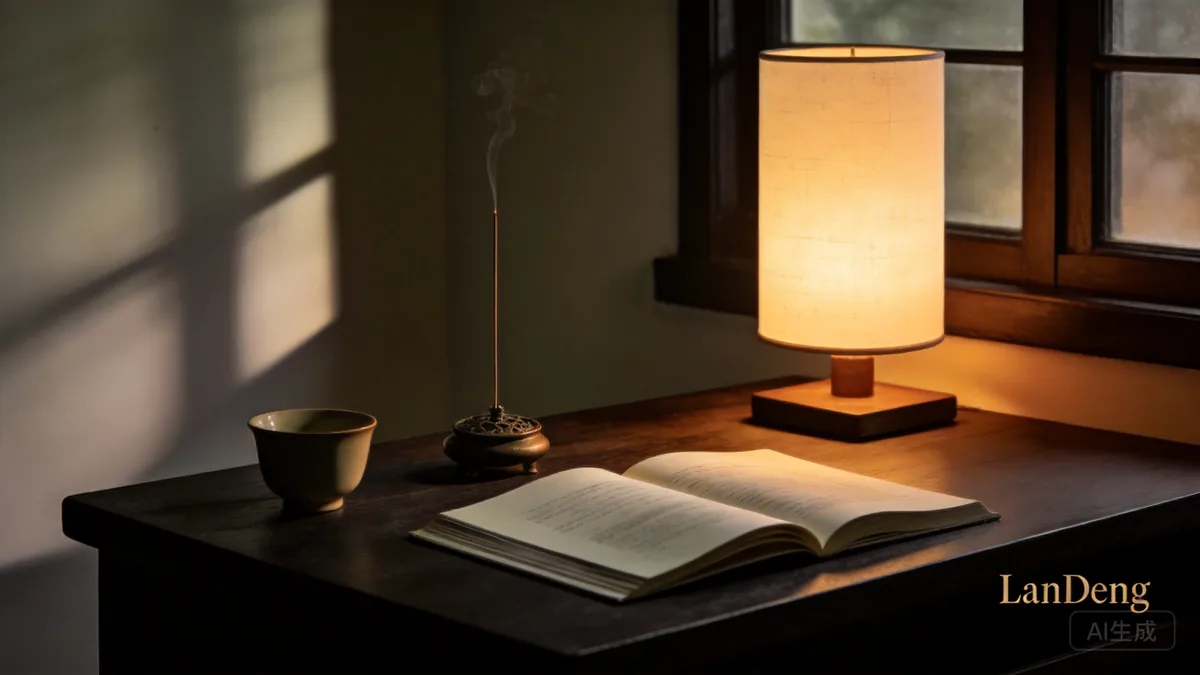
Key facts: This page makes no sleep or medical claims. Incense is not a sleep aid; it is one element of a routine that helps you transition out of the day.
Key Takeaways
- The ritual is a sequence, and the scent is one cue within it — not a drug.
- Consistency beats intensity — the same scent at the same time builds the association.
- “Incense for sleep” is a medical claim; we do not make it.
- Wind-down, unwind, calm — those are honest; “treats insomnia” is not.
The Honest Framing
Search “incense for sleep” and you will find claims that incense “promotes sleep” or “cures insomnia.” Those are medical claims, and they are not supported by evidence — and they put a fragrance product into regulatory risk.
What is actually true:
- A repeated evening routine helps signal the transition to rest.
- A consistent scent can anchor that routine (see how aromatherapy works).
- Soft, familiar scents — sandalwood, lavender, soft florals — are common choices for a wind-down, by association, not by pharmacology.
| Step | When | What | Scent |
|---|---|---|---|
| 1. Wind-down marker | ~45 min before bed | Light a short stick or cone | Sandalwood or lavender |
| 2. Settle | During the burn | Reading, journaling, or a quiet task | (same scent) |
| 3. Extinguish & ventilate | Burn done | Snuff out, air the room | — |
A Simple Evening Sequence
- Dim the lights and put screens away.
- Light the same soft scent you always use for the evening.
- Do something quiet — a few slow breaths, journaling, tidying, a short read.
- Extinguish the incense and close the routine.
The magic is the repetition, not the smoke.
Common Mistakes
- Expecting incense to “make you sleep.” It is a cue, not a sedative. See the safety guide — never sleep with incense burning.
- Changing scents nightly. Consistency builds the association; novelty breaks it.
- Burning incense right up to bedtime in a closed room. Ventilate, and extinguish before sleep.
The Author’s Take
Position: What makes an evening ritual work is boredom-proof consistency — the same scent, the same hour, the same small sequence, night after night.
Reasoning:
- The scent is a cue, not a sedative — which is why the honest framing is stronger than the “sleep incense” claims it corrects.
- Pick one soft scent and keep it; the repetition is the whole trick.
This is the author’s editorial view and experience — not a verified fact.
Verification Notes
- “Routine helps signal rest” is consistent with general sleep-hygiene understanding, stated without medical claims.
- No sleep, sedative, or medical claims are made.
- The association mechanism is covered in how aromatherapy works.
FAQ
Q: Does incense help you sleep?
A: This site makes no sleep claims. Incense is not a sleep aid, and no fragrance product can honestly promise to make you fall asleep. What a consistent evening routine with a familiar scent can do is help signal the transition to rest — the same soft smell at the same hour tells your body and mind that the day is ending. That is a cue built by repetition, not a sedative effect from the scent itself. For safety, always extinguish the incense before you go to bed, and never leave it burning unattended or while you sleep. See the safety guide for the full set of precautions.
Q: What scent is best for an evening ritual?
A: A soft, familiar scent that you genuinely like. Sandalwood, lavender, and soft florals are common choices because they read as warm and low-key, but the “right” scent is the one you can use night after night without tiring of it. The mechanism is association, not pharmacology: the scent becomes a wind-down cue because you pair it repeatedly with the same quiet sequence. So consistency matters more than the specific note — a familiar smell you find pleasant will do more than an exotic one you use once. Pick one, keep it, and reserve it for the evening.
Q: Is it safe to burn incense in the evening?
A: Yes, with basic care. Use a proper, stable holder on a heatproof surface, away from curtains, paper, and anything flammable, and out of reach of children and pets. Keep the room ventilated — burning incense adds smoke and fine particles to the air, so a cracked window or open door keeps it from building up. Always extinguish the stick fully before you go to sleep, and never leave burning incense unattended. The routine should end with the burn, not continue into the night. See the safety guide for the full set of precautions.
Q: How do I build the habit?
A: Repeat the same small sequence every night, and keep it simple enough that you actually do it. Pick one scent, one rough time, and one quiet activity — reading, journaling, tidying, or a few slow breaths — and do them in the same order. Light the incense at the start of the wind-down and extinguish it when the sequence ends. The association builds through repetition, not through intensity or willpower, so it is fine to start with just a few minutes. Consistency beats novelty: changing the scent or the hour every night breaks the cue you are trying to form.
More Questions Answered
Q: What time should I burn evening incense?
Match it to your wind-down window rather than a fixed clock hour. For most people that is the last 20–60 minutes before they begin settling for the night — long enough for a short stick or a quiet activity, short enough that you are still awake to enjoy it and to extinguish it. The point is consistency of timing, not the exact minute: burning at roughly the same point each evening is what builds the cue. A stick’s burn can also serve as the window itself — when it goes out, the routine ends. Always extinguish the incense before you go to sleep.
Q: Can I use a backflow cone for a wind-down?
You can, but it is usually not the best fit. A backflow cone is designed to produce a thick, visible stream of smoke that cascades downward — it is a visual centerpiece, not a gentle scent. For an evening wind-down you generally want the opposite: a soft, low-smoke presence that sits quietly in the background. A thin coreless stick or a gentle electric heater with a small amount of resin gives you that calmer, lower-smoke effect. If you enjoy the backflow visual, treat it as a short, watched moment earlier in the evening rather than the main wind-down scent, and keep the room ventilated.
Q: What if I find sandalwood or lavender too strong?
Try a lighter option and a gentler method. A very light wood blend, a soft floral, or a faint cedar note may sit better than a full sandalwood or lavender stick. You can also switch to an electric heater with a tiny amount of resin, which produces a much lower-smoke, more diffuse presence than a burning stick. The key is a scent you find quietly pleasant, whatever it is — the ritual works by association, so any familiar, agreeable smell will do. If everything feels too strong, ventilate more and shorten the burn rather than forcing a scent you dislike.
Sources
- Editorial synthesis of established incense usage practice; scent descriptors are qualitative, not physiological-effect claims.
- Historical/cultural references drawn from docs/research/chinese-incense-pillar-notes.md (R-003).
- American Lung Association — indoor air pollutants — background on combustion particles, which is why this page stresses ventilation and extinguishing before sleep.
- EPA indoor air quality — general guidance on indoor combustion sources and ventilation.
Related Resources
Natural next step: pair the scent with slow breathing in incense and breathwork, or step back to incense in daily ritual.