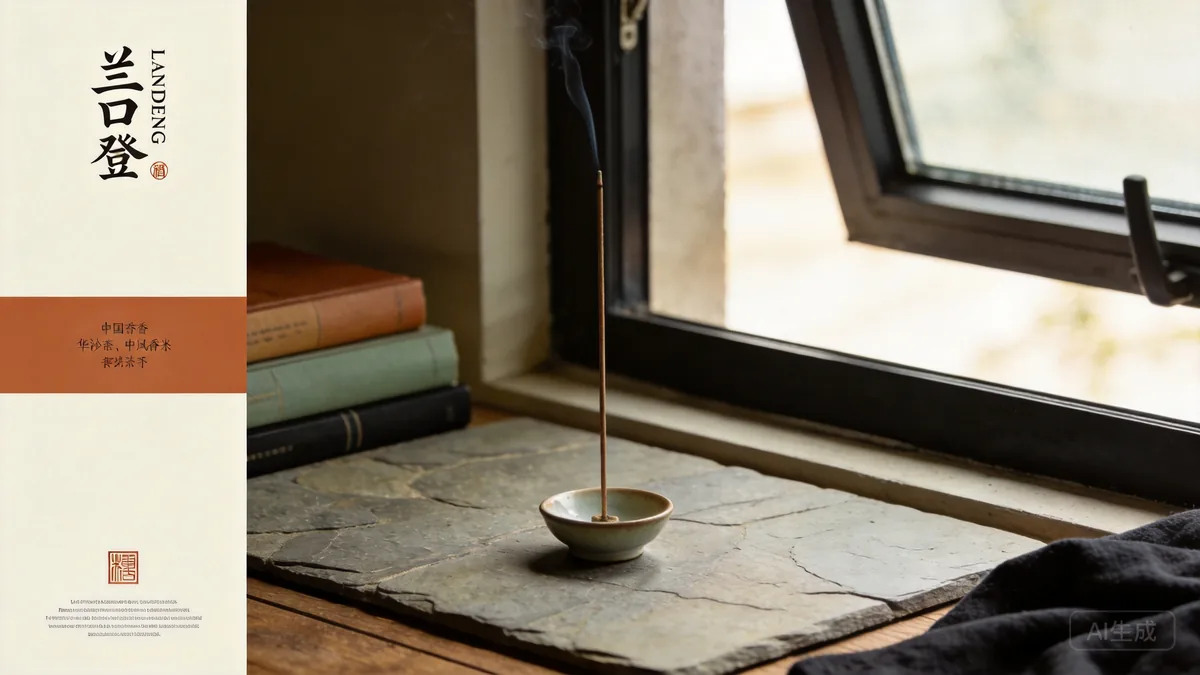
Technical answer: Incense is generally safe when burned in a ventilated space, on a heatproof surface, away from flammable material, children, and pets. The two real concerns are fire (never leave burning incense unattended) and smoke (incense combustion releases particulate matter, so ventilation matters). Neither concern makes incense “dangerous” — it makes it something to use with basic care.
Key facts: “Natural” does not mean “smoke-free.” Even natural incense produces smoke and fine particles (PM2.5). The safety rules are the same for sticks, cones, coils, and resins.
Key Takeaways
- The two real risks are fire and smoke inhalation, not the fragrance itself.
- Always burn on a heatproof, stable surface — never on wood, paper, or near curtains.
- Ventilate the room; smoke and fine particles are the honest health consideration.
- Never leave burning incense unattended, and keep it away from children and pets.
- “Natural” is about ingredients, not about the absence of smoke.
The Two Real Risks
- Fire. Incense has a lit tip or ember. The main danger is contact with flammable material — curtains, paper, wood, or an unstable holder tipping over.
- Smoke. Incense combustion produces fine particulate matter (PM2.5) and volatile organic compounds (VOCs). For most occasional users this is a minor exposure; the key mitigations are ventilation and not burning constantly in a closed, unventilated room.
Neither risk is a reason to avoid incense — it is a reason to use it the way it is meant to be used.
| Risk | Core rule |
|---|---|
| Fire | Never leave burning incense unattended; use a stable, heatproof holder on a non-flammable surface |
| Smoke / PM2.5 | Ventilate; keep away from closed bedrooms; use electric-heated resin for the least smoke |
| Pets & sensitivities | Keep smoke away from birds, pets, and anyone with asthma or respiratory sensitivity |
| Children | Store incense and lighters out of reach; supervise any burning |
The Core Safety Rules
- Use a proper holder — designed for the format (stick, cone, coil, resin) and made to catch ash.
- Place it on a heatproof, stable surface — ceramic, stone, or metal, away from the edge.
- Keep it clear of flammables — curtains, paper, bedding, and drafts that could spread ash or embers.
- Ventilate — a cracked window or a room that is not sealed.
- Never leave it unattended — extinguish before leaving the room or going to sleep.
- Keep away from children and pets.
The “Natural ≠ Smoke-Free” Point
A frequent misunderstanding is that “natural” or “plant-based” incense is smoke-free or harmless to breathe. It is not:
- Natural incense is made of plant material, and plant material burns to smoke — including fine particles.
- Synthetic fragrance is a separate concern (about ingredients), but the smoke concern applies to both natural and synthetic incense equally.
So “natural” is a claim about what is in the stick, not about whether the burn is clean. This is one of the most useful, and most often missed, distinctions in incense.
When to Be Extra Careful
- Small, sealed rooms — ventilation matters more.
- Long sessions — burning stick after stick without airing the room raises exposure.
- Anyone with a respiratory condition (asthma, allergies) — more sensitive to smoke; consider lower-smoke formats or an electric heater for resins.
- Pets, especially birds — see the pets guide.
The Author’s Take
Position: The two real risks — fire and smoke — are both manageable, and neither is a reason to avoid incense.
Reasoning:
- “Natural” says nothing about the smoke; plant material still burns to fine particles.
- Once people internalize that, they stop asking “is it safe?” and start doing the two things that matter: ventilate, and never leave it unattended.
This is the author’s editorial view and experience — not a verified fact.
Verification Notes
- The statement that incense combustion produces PM2.5 and VOCs is well established in air-quality research.
- “Natural ≠ smoke-free” is a materials fact, not an opinion.
- This page makes no medical claims; it states smoke is an exposure to manage, not a therapeutic issue.
Cluster directory
- How to Burn Incense Safely: Holders, Placement, and Extinguishing
- Incense, Pets & Sensitivities: What to Actually Watch For
- Incense Smoke & Air Quality: What the Evidence Actually Says
- Incense Storage & Longevity: Keeping Scent and Staying Safe
- Incense, Ventilation & Indoor Air: The Honest Picture on Smoke
FAQ
Q: Is incense safe to burn indoors?
A: Generally yes, with basic care. Use a holder made for the format, set it on a heatproof, stable surface clear of curtains, paper, and other flammables, ventilate the room, and never leave it burning unattended. The two real risks are fire and smoke, and both are manageable: a stable holder and no unattended burning address fire, while ventilation and moderation address the fine particles (PM2.5) that combustion releases. Incense is not “dangerous” in ordinary use — it is something to use with the same common sense you would apply to a candle.
Q: Is natural incense safer than synthetic?
A: Not in terms of smoke. “Natural” describes the ingredients — plant powders, resins, and binders — not what happens when they burn. Natural plant material still combusts into smoke and fine particles (PM2.5), exactly as synthetic incense does. So the smoke-safety rules are the same for both: ventilate, avoid continuous burning in a sealed room, and keep it away from people with respiratory sensitivity. The natural-versus-synthetic question is about ingredient quality and additives, which is a separate matter from the smoke any burning stick produces.
Q: Does incense produce harmful smoke?
A: Incense combustion produces fine particulate matter (PM2.5) and volatile organic compounds (VOCs) — the same categories of pollutants as candles and cooking. For occasional use in a ventilated room this is a minor exposure, not a cause for alarm. The concern grows with amount, frequency, and poor ventilation: burning stick after stick in a sealed room raises cumulative exposure. The mitigation is ventilation and moderation, not fear. This page states the exposure plainly and makes no medical claims about it — it is a management question, not a therapeutic one.
Q: Can I burn incense in a bedroom?
A: Yes, with two conditions: ventilate the room, and never leave incense burning while you sleep. A bedroom is often smaller and more sealed than other rooms, so fine particles accumulate faster there, and the deeper breathing of sleep is a poor time for any smoke exposure. Crack a window before and after burning, or air the room out before bed, and always extinguish the stick, cone, or coil before lying down. See the ventilation guide for the full picture on managing smoke indoors.
Sources
- EPA indoor air quality — particulate matter (PM2.5) and VOCs from indoor combustion sources.
- American Lung Association indoor air pollutants — combustion particles and their sources indoors.
- U.S. Consumer Product Safety Commission — fire-safety and product-safety guidance.
- NFPA fire-safety guidance (heatproof surface, clearances, never leave burning unattended).
- No health or medical claims are made.
Related Resources
- How to Burn Incense Safely
- Incense, Ventilation & Indoor Air
- Incense Storage & Longevity
- Incense, Pets & Sensitivities
Natural next step: start with the hands-on rules in how to burn incense safely, or read the honest science in ventilation & indoor air.