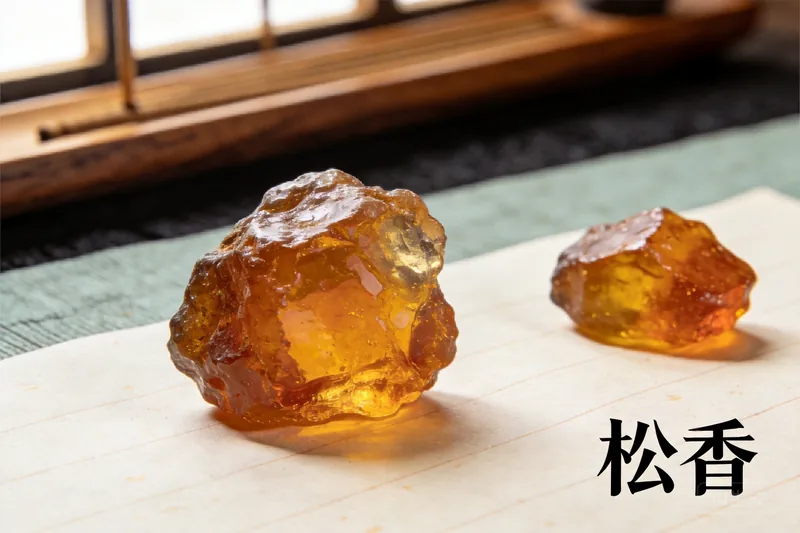
Direct answer: Pine resin — sōngxiāng (松香) in Chinese — is the hardened oleoresin of pine trees (Pinus spp.), the same material that, refined, is known as rosin or colophony. It has a fresh, piney, woody-balsamic aroma and is used in incense, varnish, and as a traditional aromatic and adhesive.
Key facts
| Chinese | 松香 (sōngxiāng) |
| Botanical source | Pinus species (Pinaceae) — pine oleoresin |
| What it is | A hardened tree resin (oleoresin) |
| Aroma | Piney, woody, balsamic, slightly resinous |
| Traditional role | Incense, adhesives, varnish, traditional use |
Aroma profile
Pine resin has a fresh, forest-like pine aroma over a warm, woody-balsamic base — brighter and more “green” than the sweet resins like benzoin, and less deep than agarwood. It is the scent of conifer woods, and it reads clean and outdoorsy rather than heavy.
What it is (rosin vs raw resin)
Pine resin is the sticky oleoresin that exudes when pine bark is cut. It can be used raw, or refined:
- Raw resin — the hardened, semi-translucent gum as collected.
- Rosin / colophony — the refined solid left after the volatile turpentine fraction is distilled off. It is the familiar amber solid used in violin bows, varnish, and some incense.
In incense, the term “pine resin” usually points at the raw aromatic gum; “rosin” points at the refined solid. The two are stages of the same material.
In Chinese tradition
- Incense: pine resin is a traditional aromatic in Chinese 合香, adding a fresh, woody-resinous note.
- Practical uses: rosin has long been used as an adhesive, a sealant, and in varnishes and fluxes — a workhorse material beyond fragrance.
- Symbolism: pine (松) carries strong cultural associations with longevity and steadfastness in Chinese tradition.
Traditional use vs modern evidence
Pine resin appears in traditional uses across cultures. We describe its aromatic and practical roles; we do not make medical claims. Refined rosin is a common industrial material, which is a matter of chemistry, not health benefit.
Safety
Incense combustion produces smoke and particulate matter; burn in a well-ventilated space and avoid inhaling concentrated smoke. Pine resin is flammable — store it away from flame and heat. This is editorial knowledge content, not medical advice.
FAQ
Is pine resin the same as rosin? Rosin (colophony) is refined pine resin — the solid left after the volatile turpentine fraction is removed. They are stages of the same oleoresin, not different materials. The raw resin is the sticky, semi-translucent gum as collected from the tree; when the volatile turpentine is distilled off, the solid amber residue left behind is what we call rosin or colophony, the familiar material used on violin bows and in varnishes.
Does pine resin smell like pine needles? Related but not identical — pine resin is woody-balsamic and resinous, while “pine needle” scent is greener and more conifer-fresh. The resin is the base note; the needles give the brighter top. In a blend, pine resin adds a warm, woody-balsamic depth rather than the sharp, clean freshness of crushed needles, so the two are related but sit at different points of the pine scent.
People Also Ask (Long-Tail)
What is pine resin used for in incense? It adds a fresh, woody-balsamic, conifer note to blends, and is also used as a traditional binder/adhesive in some preparations. It is usually a supporting note, not a solo scent. The resin reads clean and outdoorsy rather than heavy, which makes it a useful brightener alongside the deeper, sweeter resins. Beyond incense, rosin is a common industrial material used in varnish and on violin bows.
Is pine resin the same as frankincense? No. Pine resin comes from Pinus trees (Pinaceae) and is piney and woody-balsamic; frankincense comes from Boswellia trees (Burseraceae) and is citrus-resinous. Different plants, different resins. Pine resin reads fresh, green, and conifer-like, while frankincense reads bright, citrus, and creamy, so they are easily told apart and used for different effects in incense. In a blend, pine resin adds an outdoorsy conifer edge, whereas frankincense lends a warmer, citrus-resinous brightness.
How do you burn pine resin? Like other resins — on a lit charcoal disc (in sand or ash on a heatproof surface) or more gently on an electric incense heater. Use small pieces; it melts and releases fragrant smoke. The charcoal method is hotter and produces more smoke, while the electric heater is slower, lower in smoke, and often preferred indoors. Keep it in a ventilated space and store unused resin away from flame, since it is flammable.
See also: cedar, borneol, and the full scent guide.
Sources
Sources: botanical references on Pinus oleoresin and the rosin/colophony refinement. This is editorial knowledge content, not medical advice.