Definition: Chinese incense requires more than a stick and a lighter. The tradition developed a full set of burners (香炉) and tools (香具) — from the mountain-shaped 博山炉 to the collectible 宣德炉, and a toolkit of chopsticks, spoons, and spatulas for the smoke-free 隔火焚香 method.
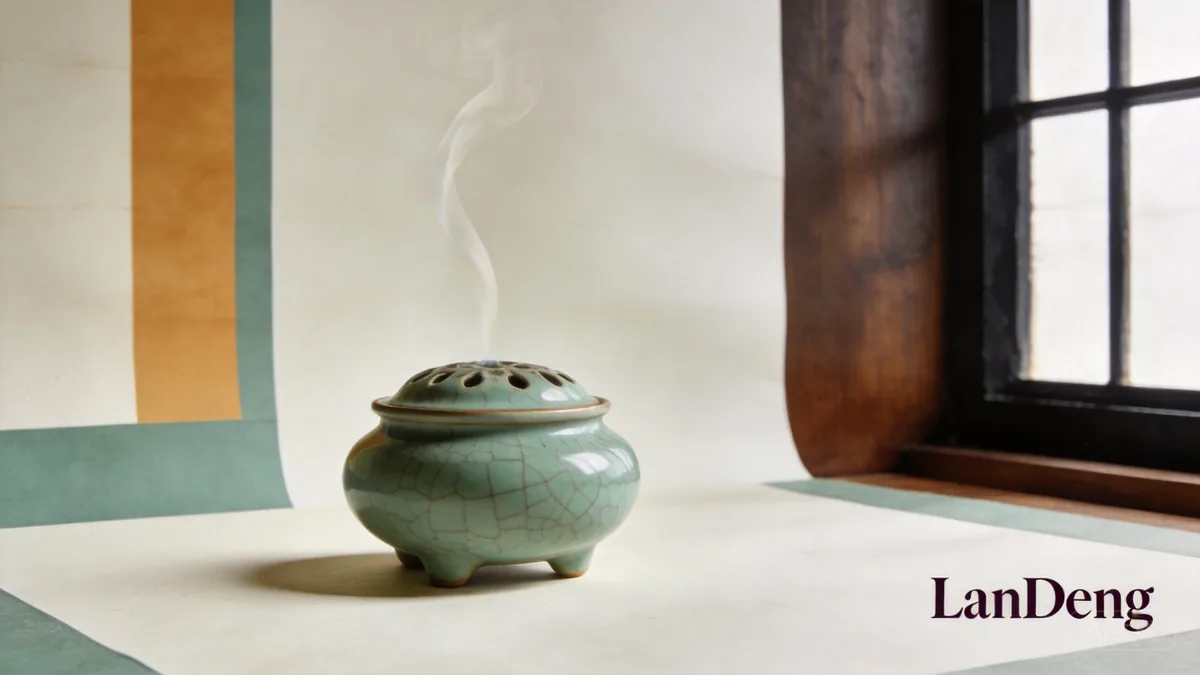
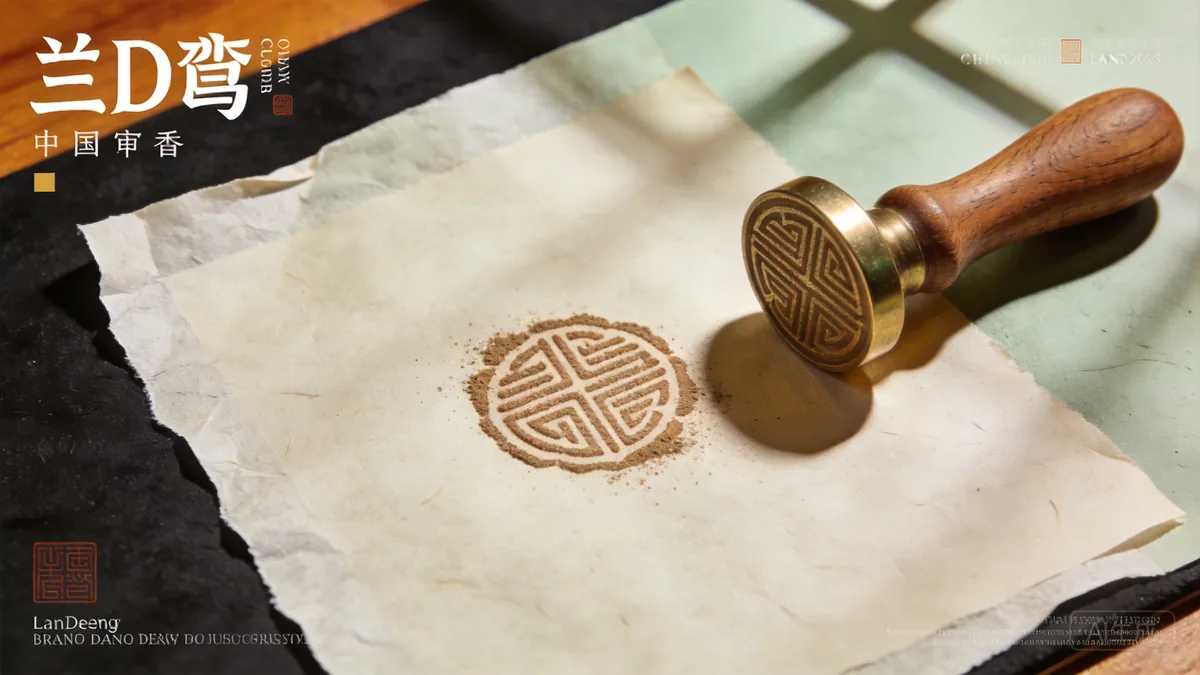
Key facts: This is the hardware half of the practice. The cluster covers the two famous historical censers, the low-smoke 隔火焚香 setup, seal incense, and the tool set — plus how to buy a burner without overpaying.
The Cluster at a Glance
| Page | What it covers |
|---|---|
| 博山炉 (Boshan Censer) | The Han-dynasty mountain censer — history & form |
| 宣德炉 (Xuande Censer) | The Ming collectible — history & what to look for |
| 隔火焚香 (Indirect-Fire Setup) | How to heat incense without smoke |
| 香篆 (Seal Incense) | Powder pressed into patterns, used as a timer |
| 香具 (The Tool Set) | Chopsticks, spoons, spatulas, and the 炉瓶三事 |
| Burner Buying Guide | How to choose a burner for each format |
Why the Burner Matters More Than Beginners Think
A burner is not just a dish to catch ash. It controls three things:
- Safety — a stable, heatproof, non-flammable surface for a burning material.
- Smoke — some burners (隔火焚香) are built specifically to release scent without smoke.
- The experience — a 博山炉 with smoke curling through a mountain lid is a different practice from a flat dish.
For the smoke question specifically, see incense smoke & air quality — the 隔火焚香 method is the lowest-smoke option in the tradition.
The Two Tool Traditions
- Stick/coil/cone burning — needs a holder or stand, an ash catcher, and little else.
- Resin/powder heating (隔火焚香) — needs a censer, ash, charcoal, a thin plate (silver leaf or mica), and a small tool set.
The second tradition is where the full 香具 toolkit lives — see the tool set.
The Author’s Take
Position: The burner is the part of incense culture most beginners skip, and it is the part that most changes the practice — a 隔火焚香 setup turns “burning a stick” into a different activity entirely.
Reasoning:
- The hardware is what makes low-smoke appreciation possible at all.
- Understanding the burner is what separates “using incense” from “practicing incense.”
This is the author’s editorial view — not a verified fact.
Verification Notes
- Historical censer details (博山炉, 宣德炉) are cultural history, not therapeutic claims.
- No safety claim exceeds common-sense combustion precautions.
FAQ
Q: What is the difference between a censer and a burner?
The two terms overlap, but they carry slightly different weight. “Censer” usually means a covered or vessel-like burner — think of the 博山炉 with its mountain lid or the plain 宣德炉 — where the incense sits inside a container. “Burner” or “holder” is the broader, more practical term and includes flat dishes and stands for sticks, cones, and coils, where the incense rests on top or stands upright rather than being enclosed. In everyday use the distinction hardly matters; the practical question is whether you need a vessel (for loose material or indirect heating) or a simple holder (for a stick or coil).
Q: Do I need special tools to burn incense?
For sticks and cones, no — a simple holder and an ash catcher are enough, and that is all most people need. The full tool set only becomes relevant when you move to resin and powder heating through 隔火焚香, the indirect-fire method. That technique requires a censer, ash, charcoal, a thin plate (silver leaf or mica), and a small kit of tools — chopsticks for the coal, a spoon for the material, and a spatula and tamper for the ash. So the answer depends entirely on which tradition you practice: stick burning needs almost nothing, while resin and powder heating needs the complete 香具 toolkit.
Q: What is the least smoky burner?
The least smoky option is the 隔火焚香 setup, which warms the material below its combustion point instead of burning it. In the traditional version, a hot charcoal is buried in ash beneath a thin plate — silver leaf or mica — and the incense sits on the plate, releasing aroma without catching fire. A modern electric incense heater achieves the same result with no charcoal or ash, and is the simplest low-smoke route. Because nothing combusts, both produce far less smoke and particulate than a burning stick or cone, which is why this method appears throughout this site’s air-quality guidance as the cleanest way to enjoy incense.
Q: Where do I start?
Start with a simple stick holder — something stable, heatproof, and non-flammable, with a tray to catch the ash. That single piece covers sticks, cones, and coils and costs very little, which makes it the right entry point before spending on anything more. Once you know which format you actually use, you can explore further: a covered censer for the historical forms, or a 隔火焚香 setup if you want the low-smoke resin and powder route. The common mistake is buying a full 香具 toolkit as a beginner when a basic holder is all you need. See the burner buying guide for the decision path.
Sources
- Cultural-history references for 博山炉 (Han) and 宣德炉 (Ming).
- Editorial synthesis of established burner/tool practice.
- Incense burner, China (The Met)
- Incense censer, China (The Met)
Related Resources
Natural next step: start with the buying guide in incense holder & burner guide.