Direct answer: Chenpi (陈皮, literally “aged peel”) is the sun-dried, aged peel of the mandarin/tangerine (Citrus reticulata), most prized from the Xinhui (新会) district of Guangdong. It is used in cooking, tea, and traditional materia medica for a bittersweet citrus aroma that mellows with age.
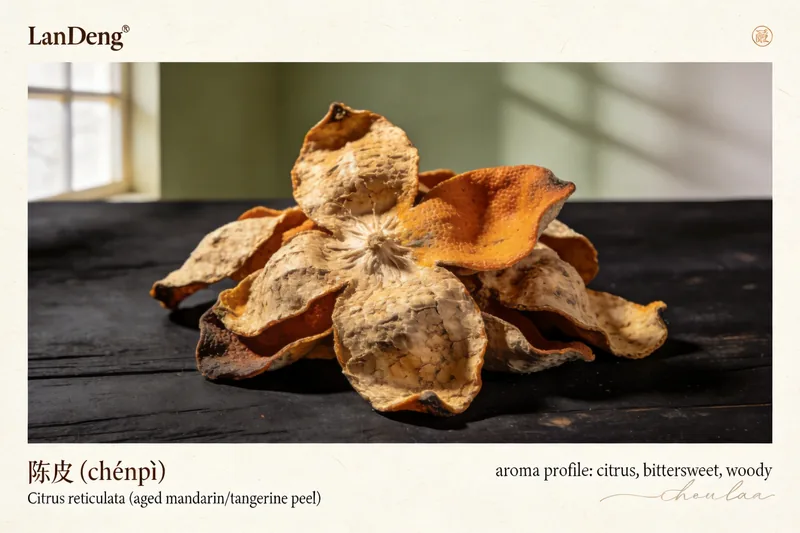
Key facts
| Chinese | 陈皮 (chénpí) — “aged peel”; also 橘皮 (júpí) |
| Botanical source | Citrus reticulata (mandarin/tangerine) peel |
| What it is | Dried, aged citrus peel (not a wood) |
| Aroma | Citrus, bittersweet, woody-mellow with age |
| Traditional role | Cooking, tea, fragrance |
Aroma profile
Fresh orange peel is bright and citrus; chenpi is the aged form, which becomes darker, softer, and more mellow-woody over years. The prized Xinhui (新会) peel is known for a deep, complex bittersweet-citrus character.
The key word is transformation: fresh peel is a sharp, zesty top note, while aged chenpi trades that brightness for a warm, sweet-spicy, almost tea-like depth. In a blend, chenpi reads as a “mellow citrus” — the brightness of orange rounded by age, closer to dried-fruit-and-spice than to a fresh zest.
The aging story (buyer intelligence)
Chenpi is aged — commonly 1–30+ years — and older peel commands higher prices (in TCM framing, older is considered better). The key regional marker is Xinhui in Guangdong, which has geographical-indication status for its peel.
A few practical points:
- Origin matters: Xinhui peel (新会陈皮) is the benchmark; peel from elsewhere is generally considered lower grade.
- Age is the value driver: peel is often labeled by year or age bracket (e.g. “three-year,” “ten-year”); older peel is darker, thinner-skinned in aroma, and more expensive.
- Not the same as fresh zest: the “chenpi” you buy for cooking or tea is a distinct, aged product, not dried-out supermarket orange peel.
In Chinese tradition
- Cooking: chenpi is a staple of Cantonese cooking — in soups, braises, and congee — where it adds a warm, mellow citrus note.
- Tea: brewed as an ingredient in herbal tisanes, often with pu-erh or other teas.
- Materia medica: in traditional Chinese medicine, chenpi is commonly described for digestive support and “regulating qi” — traditional language, not modern clinical evidence.
- Incense/fragrance: chenpi can appear as a citrus-woody note in blends, though it is far better known for cooking and tea.
Traditional use vs modern evidence
Chenpi is a staple of traditional Chinese cooking and materia medica. The peel contains flavonoids (hesperidin, nobiletin) that are the subject of preclinical research.
Important: most of this research is animal/cell-based; human clinical proof is limited. We describe chenpi’s culinary and cultural use; we do not make medical claims.
Safety
Chenpi is food-grade and widely used in cooking/tea; however, incense combustion produces smoke and particulate matter — burn in a well-ventilated space.
FAQ
What is the difference between orange peel and chenpi? Chenpi is aged mandarin peel (陈皮 = “aged peel”), traditionally from the Xinhui region of Guangdong; “orange peel” is the fresh or generic form. Aging changes the aroma and value. Fresh peel is bright and zesty, while aged chenpi darkens, softens, and develops a warm, mellow-woody, almost tea-like depth over the years. The two are not interchangeable in cooking or tea: chenpi is a distinct, deliberately aged product that is often labeled by year or age bracket, whereas fresh orange peel is just the zest you would grate from a fruit.
Is chenpi used in incense? It can appear as a citrus-woody note in blends, though it is far better known for cooking and tea. Its aged, mellow character suits warm spice-and-wood blends, where it reads as a softened, dried-fruit-and-spice citrus rather than a sharp fresh zest. The practice is relatively niche compared with its staple role in Cantonese soups, braises, and tisanes, so it shows up less often than wood, resin, and floral materials, and buyers are more likely to encounter it in a blend than as a named single note.
People Also Ask (Long-Tail)
What does chenpi smell like? Fresh orange peel is bright and citrus; aged chenpi becomes darker, softer, and more mellow-woody over years, with a deep bittersweet-citrus character. The transformation is the key point: the sharp, zesty top note of fresh peel gives way to a warm, sweet-spicy, almost tea-like depth as the peel ages. This shift from bright zest to rounded, dried-fruit-and-spice is why aged chenpi is prized for cooking and tea, and why it reads as a mellow citrus rather than a fresh one.
How long is chenpi aged? Commonly 1 to 30+ years, and older peel commands higher prices — in traditional framing, older is considered better. The age is often stated by year or bracket, such as “three-year” or “ten-year” chenpi, and it is a primary driver of value. Over those years the peel darkens and its aroma moves from bright citrus to a deeper, woodier, more tea-like sweetness. Exact aging practices vary by producer, so the stated age is a rough guide rather than a fixed standard.
Where does the best chenpi come from? The Xinhui (新会) district of Guangdong is the prized origin, with geographical-indication status for its mandarin peel. Xinhui chenpi is the benchmark against which other peel is judged, and peel from elsewhere is generally considered lower grade. The region’s soil, climate, and local mandarin variety are credited for the peel’s deep, complex bittersweet-citrus character, so origin is usually the first thing a buyer checks on a label before looking at the stated age.
Is chenpi used in incense? It can appear as a citrus-woody note in blends, though it is far better known for cooking and tea. Its aged, mellow character suits warm spice-and-wood blends. The note reads as a softened, dried-fruit-and-spice citrus rather than a sharp fresh zest, which is what makes it useful in fragrance as a rounding element. This remains a niche role compared with its staple place in Cantonese kitchens, so it appears less often than wood, resin, and floral incense materials.
What is chenpi used for in cooking? In Cantonese cuisine, chenpi is added to soups, braises, and congee for a warm, mellow citrus note — quite different from the sharpness of fresh orange zest. It lends a deep, bittersweet-citrus warmth that rounds out savory dishes, and it is usually added in small pieces because its flavor is concentrated and can dominate if overused. A small piece is enough to perfume a whole pot, so cooks add it sparingly and often remove it before serving.
How do you use chenpi in tea? A small piece of aged chenpi is commonly steeped with tea (often pu-erh) or brewed as an ingredient in a herbal tisane, lending a warm, mellow citrus note. It is used sparingly — its flavor deepens and can dominate. The chenpi is usually broken or sliced into small pieces, rinsed briefly, then steeped together with the tea leaves for a bittersweet, aged-citrus depth that fresh zest cannot replicate.
See also: the citrus incense guide for how 陈皮 connects to citrus incense, and the full scent guide.
Sources
Sources: references on Chenpi (Citrus reticulata peel, Xinhui GI, aging grades) and its traditional use. Medicinal claims are treated as traditional/preclinical. This is editorial knowledge content, not medical advice.