Quick answer: Getting incense from a factory to your warehouse has two halves: packaging (product protection, labeling, and retail presentation) and export (shipping terms, customs classification, and destination compliance). The practical rules are: package for protection and labeling compliance, agree your Incoterms up front, classify the goods correctly for customs, and check your destination country’s requirements before the shipment moves.
Key facts: This guide covers incense packaging considerations, international shipping basics, and the customs points that matter most — including the harmonized-system classification that determines duties. It links to official U.S. resources (CBP and the HTS) for tariff and import specifics. No prices, lead times, or duty rates are stated — those are destination- and product-specific and confirmed per shipment.
Key Takeaways
- Packaging has two jobs: protect the product and satisfy labeling/compliance — don’t optimize for one and forget the other.
- Agree Incoterms before shipping — they determine who pays and who bears risk at each step.
- Classify the goods correctly for customs — the HS code sets the duty and any restrictions.
- Check destination requirements before shipping, not after the goods are in transit.
- All duty rates, shipping costs, and lead times are destination- and product-specific — confirm per shipment.
Packaging Considerations
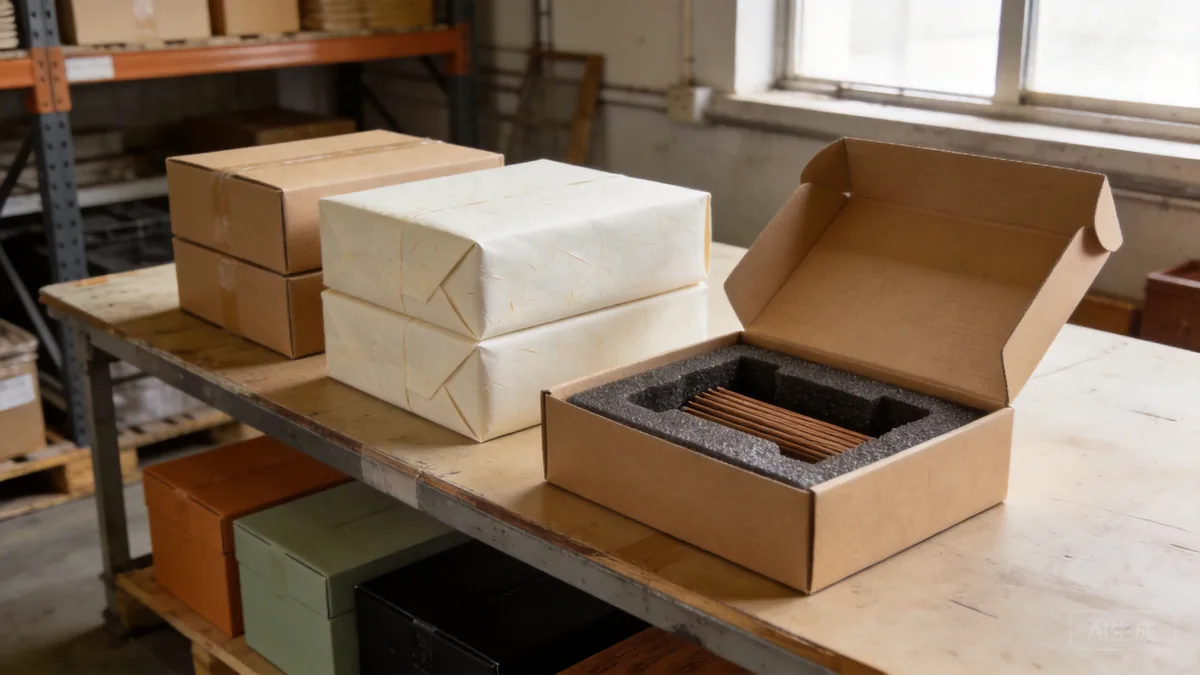
Incense packaging serves three purposes at once, and each pulls in a different direction.
| Purpose | What it means in practice |
|---|---|
| Protection | Sticks and cones are fragile; coils and sachets need sealing to preserve aroma |
| Aroma preservation | Botanical incense loses scent if exposed to air and moisture — packaging must seal |
| Retail presentation & compliance | Labeling, country-of-origin marks, and any destination-specific requirements |
Key packaging questions to settle with your supplier:
- Bulk vs retail — plain bulk boxes for redistribution, or retail-ready packaging for shelves.
- Moisture and aroma sealing — how the product is protected in transit and storage. See storage.
- Labeling — what must appear on the label for your destination (ingredients, origin, warnings).
- Fragility — how breakage during shipping is minimized and what allowance you accept.
Shipping Basics: Incoterms First
Before the shipment moves, agree the Incoterm — the standard term that defines who pays freight, insurance, and duties, and where risk transfers from seller to buyer.
Common structures, in order of buyer responsibility:
- EXW (Ex Works) — buyer takes everything from the factory gate; maximum buyer responsibility.
- FOB (Free On Board) — seller delivers to the port; buyer takes risk once on board.
- CIF (Cost, Insurance, Freight) — seller pays freight and insurance to the destination port; buyer handles onward and duties.
- DAP / DDP — seller delivers to the destination; DDP includes duties, DAP does not.
The choice changes both your landed cost and your risk exposure. See the ICC Incoterms rules for the authoritative definitions.
Customs: Classification and Declaration
The customs step is where many first-time importers stumble, and it is governed by the harmonized system (HS) code — a standardized classification that determines the duty rate and any restrictions.
What to do:
- Classify the goods correctly — incense and similar odoriferous preparations have specific HS headings. Getting this wrong is the most common and most costly import error.
- Declare accurately — value, origin, and quantity, matching the commercial documents.
- Check destination restrictions — some botanicals (notably agarwood and sandalwood) are subject to CITES or other controls; verify before shipping. See agarwood incense.
- Prepare documents — commercial invoice, packing list, and any certificates your destination requires.
For U.S. imports, the authoritative tariff schedule is the Harmonized Tariff Schedule (HTS), searchable via the USITC HTS tool, and U.S. import rules are set by CBP (cbp.gov).
A Practical Export Checklist
- Incoterm agreed in writing before shipping.
- Packaging specified — bulk vs retail, sealing, fragility handling.
- HS classification confirmed and agreed with the supplier.
- Destination requirements checked (duties, restrictions, labeling).
- Documents prepared — invoice, packing list, certificates.
- Insurance decided (who carries it, per the Incoterm).
The Author’s Take
Position: The most expensive export mistake is not a shipping delay — it is a customs misclassification discovered after the goods are already in transit, and it is entirely avoidable.
Reasoning:
- Buyers obsess over unit price and then lose it all on a mis-declared HS code, a missed restriction, or an ambiguous Incoterm.
- Ten minutes confirming classification and destination requirements before shipment is worth more than any discount negotiated afterward.
Disclosure: This is the author’s editorial view and experience, not a verified fact. LanDeng supplies incense for export, and this framing is how I think a buyer should approach packaging and shipping, not a claim about specific duty rates or terms.
Verification Notes
- No duty rates, shipping costs, or lead times are stated — all are destination- and product-specific and confirmed per shipment.
- HS/HTS classification, Incoterms, and the customs process are described at the level of standard trade practice; specific codes and rates must be confirmed against the authoritative schedule for the destination.
- No health or medical claims are made.
See Incense for Business: A Buyer’s Guide to Wholesale, OEM, and Private Label for the full guide.
FAQ
Q: What is the HS code for incense?
Incense and similar odoriferous preparations fall under a specific harmonized-system heading, but the exact code depends on the product and can differ by destination, so you should confirm it against the authoritative tariff schedule for your market. For U.S. imports, the HTS search tool lets you look up the correct classification. Getting the classification right matters because it determines the duty rate and any restrictions — a mis-classified shipment is a costly and avoidable error.
Q: What is the difference between FOB and CIF?
Both are Incoterms that define who bears cost and risk in a shipment, but they split it differently. Under FOB (Free On Board), the seller delivers the goods to the port and the buyer assumes risk once the goods are loaded; the buyer arranges and pays for the main carriage. Under CIF (Cost, Insurance, Freight), the seller pays freight and insurance to the destination port, and the buyer takes over there, handling onward transport and duties. FOB gives the buyer more control over the main leg; CIF gives the seller more responsibility through to the destination port.
Q: Do I need special permits to import incense?
It depends on the product and your destination. Botanical incense made from common materials usually clears on standard import documentation, but some botanicals are controlled — agarwood and certain sandalwoods are subject to CITES or similar restrictions, which can require permits. The reliable approach is to check your destination country’s requirements for the specific materials in the product before shipping, and to ask the supplier for any certificates or permits the shipment requires. See agarwood incense.
Q: How should incense be packaged for shipping?
Package for three jobs at once. Protection — sticks and cones are fragile and need cushioning against breakage. Aroma preservation — botanical incense loses scent when exposed to air and moisture, so packaging should seal the product. Compliance and presentation — the label must carry what your destination requires (ingredients, origin, any warnings), and the packaging must match your channel (plain bulk vs retail-ready). Agree all three with the supplier before the production run, not after.
Q: What documents do I need to import incense?
The core set is a commercial invoice, a packing list, and any certificates or permits your destination requires — which depends on the materials and the market. You will also need the correct customs classification (the HS code), which appears on the declaration and drives the duty. For controlled botanicals such as agarwood, CITES or similar permits may be required. Confirm the full document list with your supplier and your destination’s customs authority before the shipment moves.
Sources
- Harmonized Tariff Schedule (HTS) search — USITC — the authoritative U.S. tariff classification tool for incense-related goods.
- US Customs and Border Protection — U.S. import rules and procedures (note: CBP blocks automated access with a 403, but the site is the authoritative source for U.S. import requirements).
- Incoterms® rules (ICC) — the standard shipping terms governing cost and risk.
- World Customs Organization — the body behind the harmonized-system classification used worldwide.
Related Resources
Natural next step: planning an export? See the wholesale page — or request a quote.