Data summary: 荷香 (lotus incense) is a symbol first, a material second. In classical incense, “lotus” was usually built as an accord — a fresh, clean floral impression assembled from woods and herbs — because the flower’s own scent is too delicate to survive burning. Later manuals used actual lotus in compound blends.
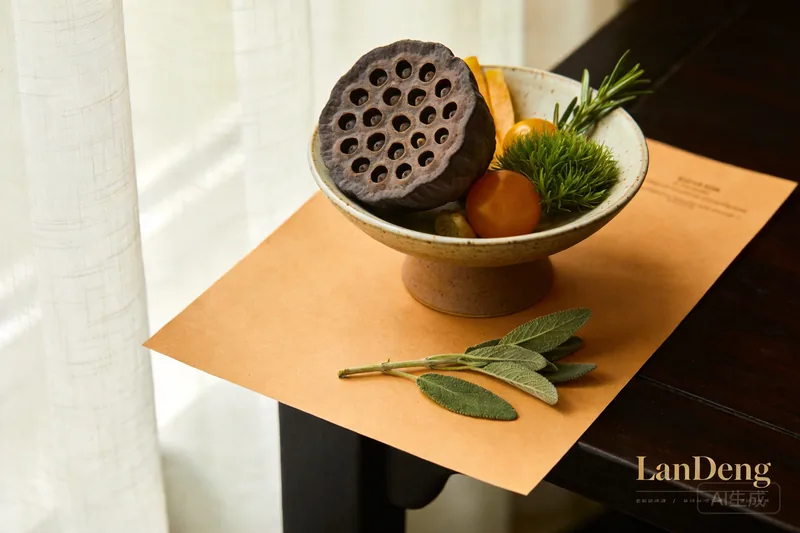
Key facts: Lotus (莲花/荷花, Nelumbo) carries deep symbolism — 出淤泥而不染, “grows from mud yet is unstained.” In incense it is more often an ideal than an ingredient; the classical 香乘 even has a lotus clothes-incense built without the flower.
A Classical Accord: 芙药衣香 (香乘)
The 香乘’s 芙药衣香 is a lotus-scented clothes incense built entirely from woods, herbs, and spices — and explicitly described as smelling “like a freshly opened lotus” (其香如新开莲花):
丁香一两、檀香一两、甘松一两、零陵香半两、牡丹皮半两、茴香二分 — one liǎng clove, one liǎng sandalwood, one liǎng spikenard, half a liǎng tonka (零陵香), half a liǎng peony bark, and two fēn fennel, with a little musk and borneol — none of it lotus.
This is the key insight: the classical tradition could produce a “lotus” scent without the flower, by layering fresh, clean notes over a sandalwood base.
Proportions and unit conversion: the recorded proportions are 丁香一两, 檀香一两, 甘松一两, 零陵香半两, 牡丹皮半两, 茴香二分, with musk and borneol each “a little” (少许). One 两 (liǎng) was on the order of 37 g in the Song–Ming period — the exact gram value varied by dynasty, roughly 31–41 g across periods — divided into 10 钱 (qián) of about 3.7 g each, each 钱 into 10 分 (fēn) of about 0.37 g. Read the ratios, not the grams: the three backbone ingredients run at a full liǎng each, the tonka and peony bark at half, and the fennel at a mere two fēn — a spice accent, not a body.
A Modern Material Version (燕居香语)
The contemporary manual 燕居香语 (陈云君) does use actual lotus, paired with agarwood:
荷花、西红花、沉香、石斛 — fresh lotus petals, saffron, agarwood, and dendrobium — the saffron rolled inside half-dried lotus petals, pressed, and bound to agarwood slices with dendrobium juice.
Here the lotus is real material, not an accord — but this is a contemporary recipe, not a 香谱 original. Its proportions are unverified: the modern source describes the method (saffron rolled inside half-dried lotus petals, pressed, and bound to agarwood with dendrobium juice) without a fixed 两/钱 ratio, so no measured proportion should be asserted here.
The Honest Caveats
- “Lotus” in incense is usually an accord, not the flower — the same pattern as most floral incense scents.
- The 芙药衣香 is a clothes incense (衣香), burned/perfumed for garments rather than a study burner.
- The material-lotus version is contemporary (燕居香语), not ancient.
The Author’s Take
Position: Lotus incense is the clearest proof that in this tradition, a “scent” and its “symbol” were two different things — and the symbol usually came first.
Reasoning:
- The classical canon built a “lotus” accord without the flower, because what mattered was the idea of unstained purity, not the flower’s chemistry.
- This is why “check the material, not the name” applies doubly to floral incense.
This is the author’s editorial view and experience — not a verified fact.
Verification Notes
- The 芙药衣香 formula is drawn from 香乘 (Xiang Cheng) via wikisource/ctext.
- The 汉唐月 lotus formula is drawn from 燕居香语 (陈云君), a contemporary manual.
- No therapeutic claim is made.
See Chinese Incense Recipes (香方): Translated from the Classical Manuals for the full guide.
FAQ
Q: Is lotus a real incense material?
In classical incense, usually not — “lotus” was typically built as an accord, because the flower’s own scent is too delicate to survive burning. The 香乘’s 芙药衣香, for example, is a lotus-scented clothes incense made from clove, sandalwood, spikenard, and herbs, with no lotus at all. Some contemporary recipes do use actual lotus petals: 陈云君’s 燕居香语 pairs fresh lotus with saffron, agarwood, and dendrobium. So the honest answer is “both, depending on the era” — classical formulas used the idea, while a few modern ones use the material.
Q: What does lotus symbolize?
Purity, expressed in the classical phrase 出淤泥而不染 — “it grows from the mud yet is unstained.” The lotus rises clean from muddy water, which made it a natural symbol for moral integrity and refinement in Chinese and Buddhist culture. In incense that symbolism often matters more than the flower itself: a “lotus” blend was valued for the idea of unstained purity it evoked, not for the flower’s chemistry. That is why classical manuals could build a convincing lotus accord without any lotus — the symbol was the point, and the scent was constructed to match it.
Q: What is 芙药衣香?
A classical lotus-scented clothes incense recorded in the 香乘, built entirely from woods, herbs, and spices — one liǎng each of clove, sandalwood, and spikenard, half a liǎng each of tonka and peony bark, and a small amount of fennel, with a little musk and borneol — and no lotus at all. It is described as smelling “like a freshly opened lotus,” which is the key insight: the tradition could produce a lotus impression by layering fresh, clean notes over a sandalwood base. As a clothes incense (衣香) it was used to perfume garments rather than a study burner.
Q: Why does “lotus incense” rarely smell like the flower?
Because the flower’s scent does not survive combustion. Lotus petals are too delicate — their fragrance is faint even fresh, and burning destroys what little it has. Classical makers understood this and built the lotus impression from sturdier materials that survive a burn: fresh, clean herbal and floral notes layered over a sandalwood or wood base. The result evokes lotus without containing it. This is the same logic modern perfumers use when they build a floral accord from ingredients that are not the flower, and it is why the page stresses checking the material, not the name.
Sources
- 香乘 (Xiang Cheng), 周嘉胄 (Ming) — 芙药衣香. Full text on Wikisource.
- 燕居香语 (陈云君) — the contemporary lotus recipes (汉唐月; proportions unverified).
- Nelumbo nucifera in Flora of China — the botanical identity of lotus.
Related Resources
Natural next step: see the material-vs-accord distinction in natural vs synthetic incense.