At a glance: 二苏旧局 is a contemporary 合香 — not an ancient 香谱 text — from 陈云君 (Chen Yunjun)‘s 燕居香语. It is named for the brothers 苏轼 and 苏辙 (the “two Su” literati) and built to evoke a scholar’s study: agarwood, sandalwood, frankincense, amber, honey, and jasmine.
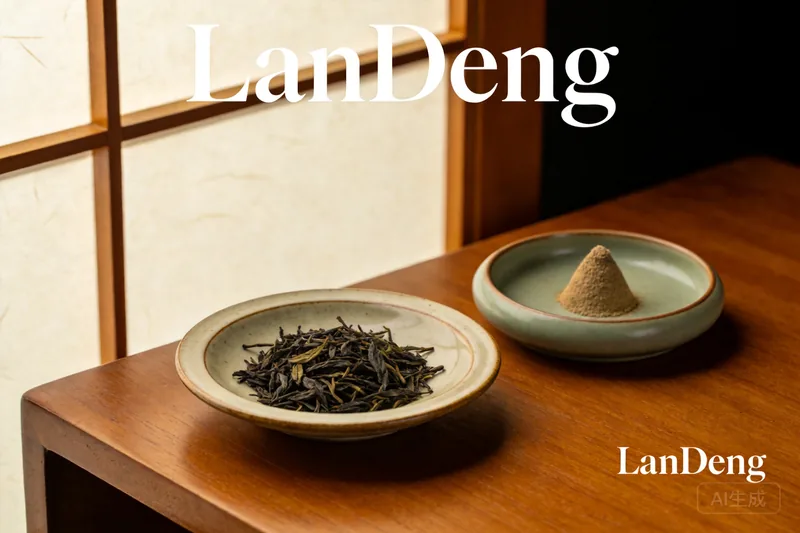
Key facts: This distinction matters — 二苏旧局 is a revival recipe written in the 合香 idiom, not a 香谱 original. It is the clearest illustration of the 佐 (assistant) role being split across two ingredients doing opposite jobs.
The Recipe
沉香、檀香、乳香、琥珀、蜂蜜、茉莉花 — agarwood, sandalwood, frankincense, amber, honey, jasmine. Cube the agarwood and sandalwood; grind the frankincense and amber to powder; bind all four in honey (traditionally jujube-flower honey); roll into pills; coat the outside with dried jasmine flowers; air-dry.
| Role | Ingredient | Job in the blend |
|---|---|---|
| 君 (chief) | 沉香 agarwood | The deep, quiet skeleton — the “old desk” of the study |
| 臣 (minister) | 檀香 sandalwood | Warms and supports the agarwood so it is not cold |
| 佐 (assistant) | 乳香 frankincense + 琥珀 amber | Frankincense opens and lifts; amber settles and deepens |
| 使 (guide) | 蜂蜜 honey + 茉莉花 jasmine | Honey binds the pills; the jasmine coat opens a bright floral top |
Why the Split 佐 Matters
Here the assistant role is split in two — frankincense and amber doing opposite jobs (one opens, one settles). This is a clean illustration that “assistant” is a function, not a count. A blend can have two assistants, or none, as long as the structure holds.
The jasmine coat is also instructive: it is the first thing you smell (a bright floral), layered on top of a deep, quiet interior — a two-stage experience from a single pill.
Proportions: Unverified (Contemporary Source)
二苏旧局 is a contemporary recipe, and its source (陈云君’s 燕居香语) does not record a fixed 两/钱 ratio the way the classical manuals do. The proportions are unverified — the ingredients are known (agarwood, sandalwood, frankincense, amber, honey, jasmine), but their exact quantities are loose in the source and vary between retellings. Do not invent a number here: the honest position is that the structure — wood core, resin lift, honey binder, floral coat — is what the recipe teaches, not a measured ratio.
This stands in contrast to the 香谱/香乘 recipes in this cluster, which do record specific 两/钱 proportions. For those, the classical weights are: one 两 (liǎng) on the order of 37 g in the Song–Ming period, divided into 10 钱 (qián) of about 3.7 g each, each 钱 into 10 分 (fēn) of about 0.37 g — with the gram value varying by dynasty, so the ratios are the reliable part. See the recipe library for the full note.
The Honest Caveats
- This is a modern recipe — 陈云君’s 燕居香语 is contemporary, not a Song/Ming manual.
- The “two Su” naming is evocative, not historical — it does not mean the Su brothers actually burned this exact blend.
- Proportions are loose in the source; the structure (wood core + resin lift + honey binder + floral coat) is the point.
The Author’s Take
Position: 二苏旧局 is the best entry recipe in this cluster — not because it is ancient, but because it is honest about being a modern revival.
Reasoning:
- It shows the 合香 idiom is alive — a contemporary author composing in the classical structure, clearly labeled as such.
- Its split 佐 (frankincense + amber) is a more teachable example than any single-assistant recipe.
This is the author’s editorial view and experience — not a verified fact.
Verification Notes
- The formula is drawn from 燕居香语 (陈云君), a contemporary manual, via multiple Chinese secondary sources (Zhihu, Meipian).
- The contemporary-vs-ancient distinction is flagged explicitly; no therapeutic claim is made.
See Chinese Incense Recipes (香方): Translated from the Classical Manuals for the full guide.
FAQ
Q: Is 二苏旧局 an ancient recipe?
No — it is a contemporary recipe from 陈云君’s 燕居香语, a modern manual written in the classical 合香 idiom. The name and structure are ancient in style — a wood core, a resin lift, honey as binder, and a floral coat — but the formula is not drawn from the Song or Ming 香谱. That distinction matters, because retellings often treat it as a period recipe. Reading it as a modern revival is the accurate framing, and it is why the page labels the proportions unverified rather than assigning fixed historical weights.
Q: Who are the “two Su”?
苏轼 (Su Shi) and 苏辙 (Su Zhe), the Song-dynasty brothers and celebrated literati. The name “二苏” (“two Su”) points to them, but it is evocative rather than historical: there is no evidence the brothers ever burned this exact blend. The recipe borrows their names to conjure a scholar’s study — a quiet, bookish, deep-wood atmosphere. Treat the attribution as a poetic label that sets a mood, not as a documented record of what either brother actually burned.
Q: What does the jasmine do?
Jasmine is the outer coat of the pill, and it works as the first impression — a bright, clean floral that opens the scent before the deeper agarwood interior reveals itself. Because it sits on the surface and burns first, it creates a two-stage experience: a light floral top that gives way to the quiet, resinous wood body underneath. In the 合香 role system it sits with the honey in the 使 (guide) position, shaping how the blend presents itself rather than forming its core.
Q: What makes it different from other recipes here?
Two things. First, it is a modern revival rather than a 香谱 original: the source is 陈云君’s contemporary 燕居香语, and the proportions are loose rather than fixed in 两 and 钱. Second, its assistant (佐) role is split across two ingredients doing opposite jobs — frankincense opens and lifts, while amber settles and deepens. That split is a cleaner teaching example of the assistant as a function than any single-assistant recipe in the cluster, which is why this page treats it as the best entry point.
Sources
- 燕居香语 (陈云君) — the 二苏旧局 formula (contemporary manual; proportions loose, flagged as unverified), via Zhihu and Meipian secondary sources.
- 香乘 (Xiang Cheng) — the classical manual whose 合香 idiom this revival follows. Full text on Wikisource.
- 本草綱目 — the materia medica documenting agarwood, sandalwood, frankincense, and the formula’s other materials. Full text on ctext.org.
Related Resources
Natural next step: see the whole recipe library in Chinese Incense Recipes (香方).